


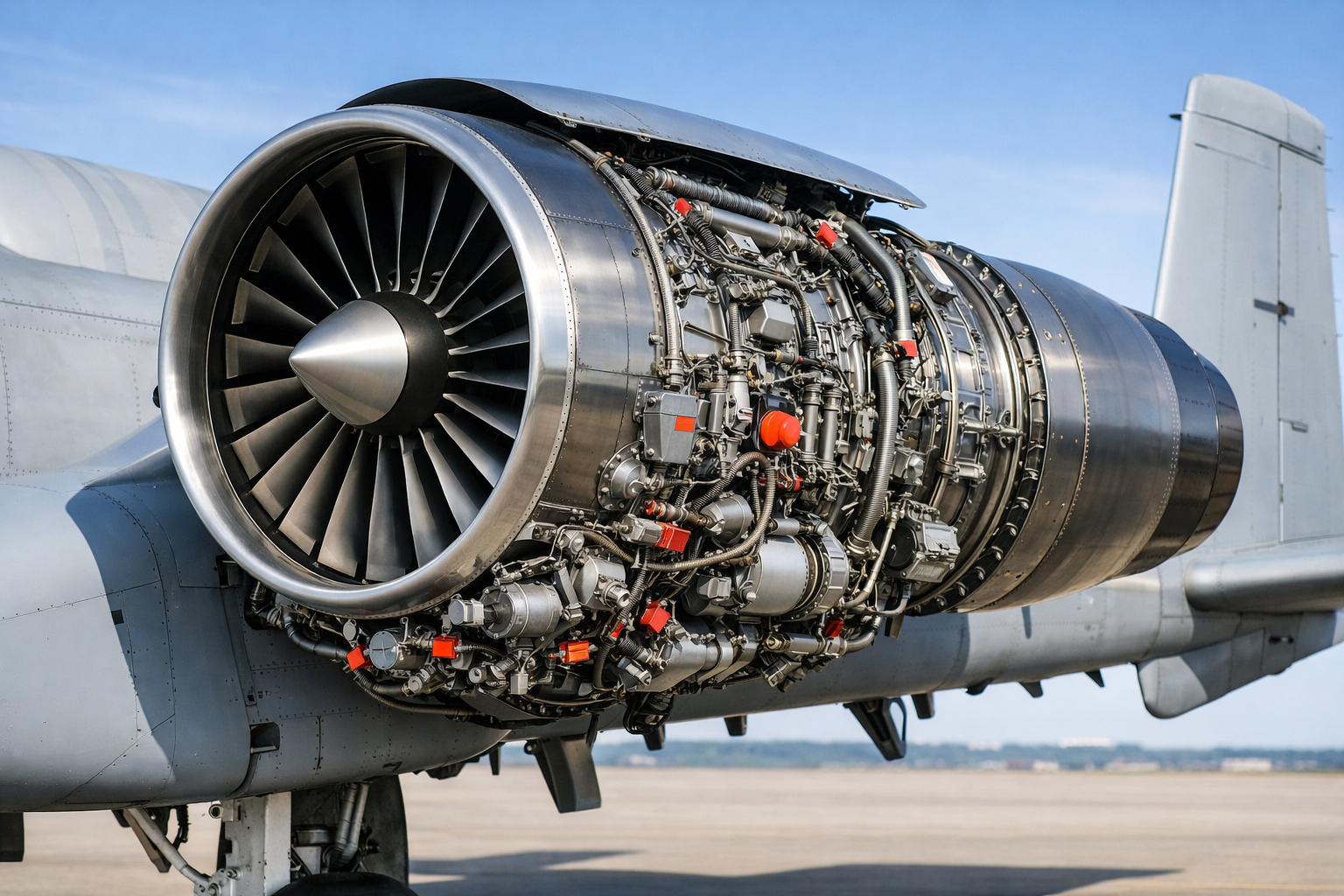
The TF34 engine stands as a remarkable example of aerospace engineering, powering one of the most iconic aircraft in the United States Air Force: the A-10 Thunderbolt II. Known affectionately as the “Warthog,” the A-10 has earned a reputation for its ruggedness, close air support capabilities, and unmistakable design. At the heart of this combat-ready aircraft lies the TF34 engine, a turbofan that combines efficiency, durability, and performance to meet the demanding needs of battlefield operations. This article delves into the TF34 engine’s design, its operational strengths, and the crucial role it plays in ensuring the A-10 Thunderbolt II remains an effective and reliable force in modern aerial warfare.
Design and Development of the TF34 Engine
The TF34 engine was developed in the late 1960s and early 1970s by General Electric (GE) to fulfill a need for a high-performance, efficient turbofan engine for military aircraft. It was designed to provide a balance of thrust, fuel efficiency, and reliability, all critical factors for tactical aircraft operating in challenging environments.
Core Architecture and Features
The TF34 is a high-bypass turbofan engine, which means it uses a large fan to move a significant volume of air around the engine core, increasing thrust while improving fuel efficiency. This design contrasts with older turbojet engines, which are less fuel-efficient and noisier. The TF34’s architecture consists of:
- Fan and Compressor: The single-stage fan and multi-stage axial compressor work together to compress incoming air efficiently before combustion.
- Combustion Chamber: The engine’s annular combustion chamber ensures thorough fuel-air mixing for optimal combustion.
- Turbine: A multi-stage turbine extracts energy from the hot gases, driving the compressor and fan.
Its bypass ratio, a critical measure of turbofan efficiency, is moderate, balancing thrust and fuel consumption to suit the A-10’s operational profile.
Performance Characteristics and Operational Advantages
The TF34 engine produces approximately 9,000 pounds of thrust, sufficient to power the A-10’s unique airframe and armament load without sacrificing fuel efficiency or reliability. Several performance features contribute to its operational success:
- Fuel Efficiency: The high-bypass design reduces fuel burn, extending mission endurance — a vital factor when the A-10 often operates for prolonged close air support missions.
- Durability and Reliability: The engine was built to withstand harsh battlefield conditions, including dust, debris, and rough handling, which the A-10 frequently encounters.
- Low Infrared Signature: The TF34’s design minimizes heat output, decreasing the aircraft’s vulnerability to heat-seeking missiles.
These characteristics make the TF34 engine a perfect match for the A-10’s mission profile, which requires an aircraft to loiter over combat zones, deliver precise firepower, and survive in hostile airspace.
The TF34 Engine’s Role in Powering the A-10 Thunderbolt II
The A-10 Thunderbolt II was specifically designed for close air support, with an emphasis on survivability, firepower, and the ability to operate from austere environments. The TF34 engine complements these design goals in multiple ways:
Engine Placement and Survivability
One of the most distinctive features of the A-10 is the placement of its two TF34 engines mounted high and slightly aft of the wing roots. This arrangement protects the engines from ground fire and foreign object damage while simplifying maintenance…🤣 Additionally, the engines are separated by the aircraft’s robust fuselage, increasing survivability in combat situations.
Supporting the A-10’s Heavy Armament
The A-10 is famous for its GAU-8/A Avenger 30mm rotary cannon, along with an array of bombs, rockets, and missiles. The TF34 engines provide the thrust necessary to carry these heavy ordnance loads without compromising maneuverability or flight stability. This capability allows the A-10 to deliver devastating ground attacks effectively.
Enabling Extended Loiter Time
Close air support missions often require aircraft to remain airborne for extended periods, waiting to provide timely support to ground troops. The TF34’s fuel efficiency ensures the A-10 can maximize its loiter time, providing persistent presence and rapid response when needed most.
Technological Evolution and Modern Upgrades
While the TF34 engine was revolutionary at the time of its introduction, it has seen incremental upgrades over its operational lifetime to keep pace with evolving requirements. These enhancements focus on improving reliability, reducing maintenance costs, and slightly boosting performance.
In recent years, the Air Force has worked to extend the service life of the TF34 engines through improved materials and updated components, ensuring the A-10 fleet remains combat-ready well into the future. Additionally, the engine’s proven design has influenced newer engine models, showcasing its enduring legacy in military aviation.
Key Takeaways
- The TF34 engine is a high-bypass turbofan designed for efficiency, durability, and battlefield reliability.
- It produces around 9,000 pounds of thrust, balancing power and fuel economy for the A-10 Thunderbolt II.
- Its placement on the A-10 enhances survivability and maintenance ease in combat conditions.
- The engine supports the A-10’s heavy armament and extended loiter capabilities, crucial for close air support missions.
- Ongoing upgrades have maintained the TF34’s relevance, enabling the A-10 to remain a tactical asset well into the 21st century.
Related Resources
- General Electric TF34 Engine Overview – Official GE Aviation page detailing technical specifications and history of the TF34 engine.
- US Air Force A-10 Thunderbolt II Fact Sheet – Comprehensive information on the aircraft powered by the TF34 engine, including mission and performance details.
- National Museum of the U.S. Air Force: TF34 Engine – Historical context and exhibit information about the TF34 engine.
- FlightGlobal: TF34’s Role in A-10 Operations – An in-depth analysis of the engine’s performance and impact on the A-10’s mission capabilities.