
Schopenhauer’s Influence on AI and Cognitive Science: Bridging Philosophy and Technology
Explore how Arthur Schopenhauer's profound concepts of will and perception inform and inspire contemporary AI and cognitive science, bridging 19th-century philosophy with modern technology.
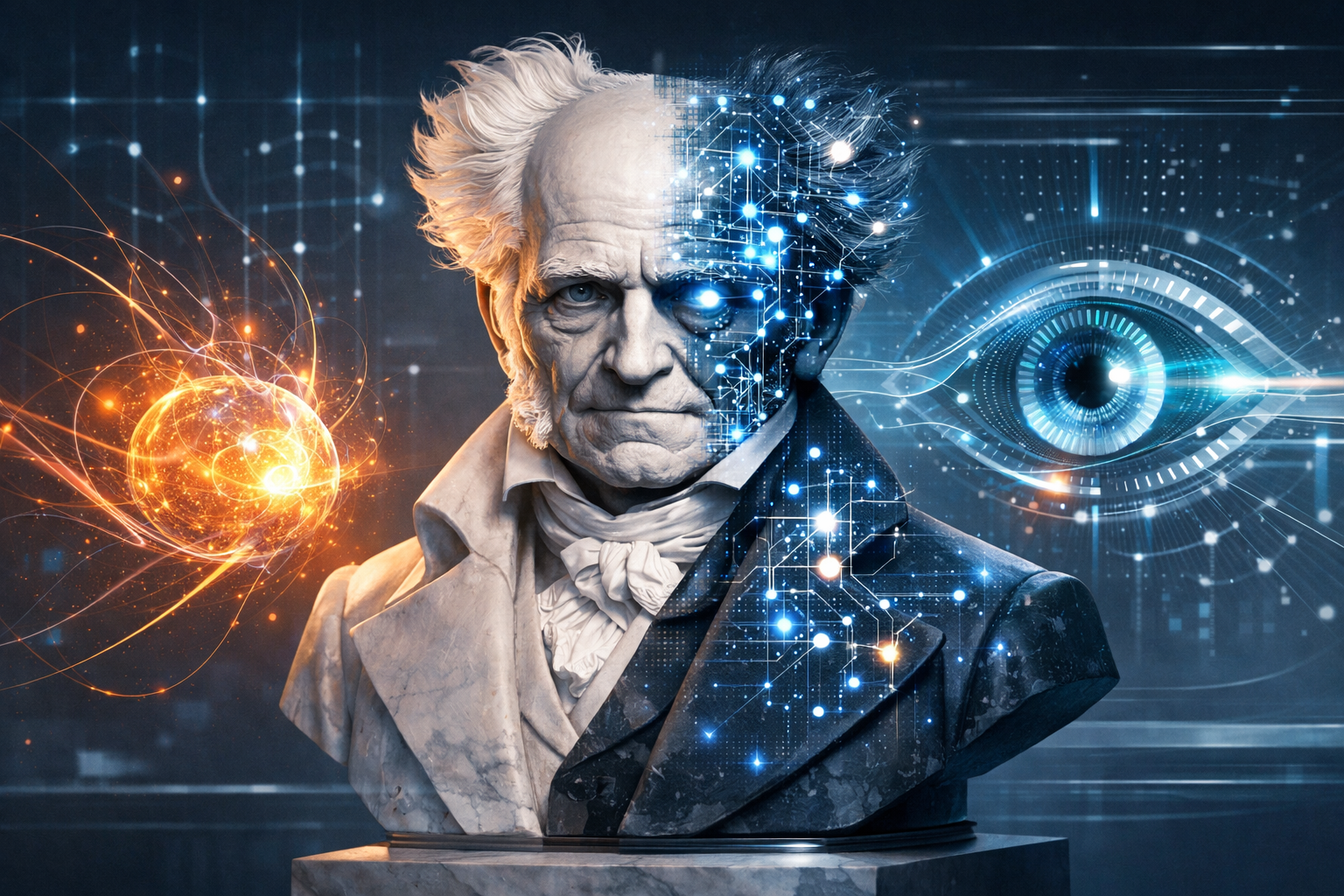
Arthur Schopenhauer, a 19th-century German philosopher, is best known for his profound exploration of human will and perception. Although his work predates modern technology by over a century, Schopenhauer’s ideas resonate strikingly with contemporary discussions in artificial intelligence (AI) and cognitive science. By examining his philosophical concepts through the lens of today’s technological advances, we uncover the deep-rooted connections between classic philosophy and the evolving fields that drive our digital age.
Understanding Schopenhauer’s Core Concepts: Will and Perception
At the heart of Schopenhauer’s philosophy lies the concept of the “will” — an irrational, blind force that underpins all existence. Unlike reason or intellect, the will is a primal driver behind human behavior and the natural world. Schopenhauer posited that our conscious experiences are mere representations shaped by this underlying will.
Complementing the will is the notion of perception, which Schopenhauer describes as the way the mind interprets and organizes sensory data. He suggested that while we perceive the world through the forms of space, time, and causality, these are subjective lenses constructed by our mind rather than objective realities.
Schopenhauer’s Philosophy Meets Cognitive Science
Cognitive science, the interdisciplinary study of the mind and intelligence, investigates how perception, thought, and behavior emerge from neural processes. Schopenhauer’s emphasis on the subjective nature of perception aligns closely with modern cognitive theories that explore how the brain constructs reality.
Perception as Constructed Reality
Contemporary cognitive science supports the idea that perception is not a passive reception of the external world but an active construction by the brain. This echoes Schopenhauer’s view that our experience of reality is a representation filtered through mental frameworks. Neuroscientific research into sensory processing and perceptual illusions illustrates how the brain interprets incomplete or ambiguous data to create coherent experiences.
The Role of the Unconscious Will
Schopenhauer’s concept of will as an unconscious force driving behavior parallels current interests in subconscious motivations and automatic cognitive processes. Modern psychology and neuroscience recognize that much of human decision-making occurs beneath conscious awareness, driven by instinctual urges, emotions, and learned patterns.
Bridging to Artificial Intelligence: Will, Intention, and Machine Perception
Artificial intelligence aims to replicate or simulate aspects of human cognition, including perception, decision-making, and learning. Schopenhauer’s insights offer a philosophical foundation for understanding some of the challenges and ambitions in AI development.
Modeling Intention and Agency
While machines do not possess “will” in a metaphysical sense, AI systems are increasingly designed to exhibit goal-directed behavior that mimics intentionality. Reinforcement learning algorithms, for example, operate based on objectives programmed or learned via feedback, embodying a form of purposive action analogous to Schopenhauer’s will driving natural phenomena.
This raises philosophical questions about the nature of agency and autonomy in AI. Schopenhauer’s distinction between the will and the intellect invites reflection on whether AI’s “decision-making” is genuinely autonomous or merely a sophisticated simulation of human intentionality.
Machine Perception and Representation
Computer vision and sensory processing in AI systems rely on algorithms that interpret raw data from cameras, sensors, or microphones to build internal models of their environment. This process mirrors the cognitive construction of perception Schopenhauer described, where the raw “will” of sensory input must be shaped into meaningful representations.
However, AI perception lacks the subjective experience or consciousness that Schopenhauer emphasized. This highlights a critical philosophical and scientific boundary between human cognition and artificial systems, raising questions about the limits of AI understanding and empathy.
Philosophical Implications for Future AI and Cognitive Research
Schopenhauer’s work encourages a humble approach to AI development, reminding us that beneath the surface of rational thought lies a complex, often irrational force influencing behavior. Recognizing this complexity can inspire more nuanced AI models that account for subconscious bias, emotional influence, and non-linear decision pathways.
Moreover, Schopenhauer’s focus on perception as a subjective filter prompts ongoing inquiry into how AI systems might achieve more flexible, context-aware interpretations of data. This is particularly relevant in areas like natural language processing and human-computer interaction, where understanding nuance and ambiguity is crucial.
Ethics and AI: Lessons from Schopenhauer
Schopenhauer was deeply concerned with compassion and the alleviation of suffering, views that resonate with current ethical debates in AI. As AI systems become increasingly integrated into society, reflecting on the humanistic values that Schopenhauer championed can guide the responsible design and deployment of technology.
For example, acknowledging the “will” behind human actions encourages developers to consider AI’s impact on human autonomy and well-being, ensuring that technology serves to enhance rather than undermine our shared humanity.
Key Takeaways
- Schopenhauer’s concepts of will and perception provide a philosophical framework that complements modern cognitive science’s understanding of the mind as an active constructor of reality.
- His notion of unconscious will parallels current insights into subconscious motivations driving human behavior, relevant to psychology and neuroscience.
- In AI, Schopenhauer’s ideas inspire reflection on machine intention, agency, and the challenges of replicating human-like perception and consciousness.
- The philosopher’s emphasis on compassion and ethical responsibility offers valuable guidance for the humane development and application of AI technologies.
- Bridging philosophy with technology enriches our understanding of both human cognition and the future potential of artificial intelligence.
Related Resources
- Stanford Encyclopedia of Philosophy: Arthur Schopenhauer – A comprehensive overview of Schopenhauer’s life, philosophy, and major concepts.
- Frontiers in Psychology: The Constructive Nature of Perception – An accessible article discussing how perception is an active process shaped by the brain.
- Google AI Research – Explore cutting-edge developments in artificial intelligence from one of the leading research institutions.
- Nature Human Behaviour: The Role of the Unconscious in Decision-Making – A scientific study on subconscious influences on human choices.
- IEEE Global Initiative on Ethics of Autonomous and Intelligent Systems – Resources and guidelines for ethical AI development.