
Predictive Analytics in Hockey: Enhancing Fan Engagement and Broadcasts
AI-driven predictive analytics is transforming hockey by forecasting game outcomes and creating immersive experiences for fans and broadcasters.
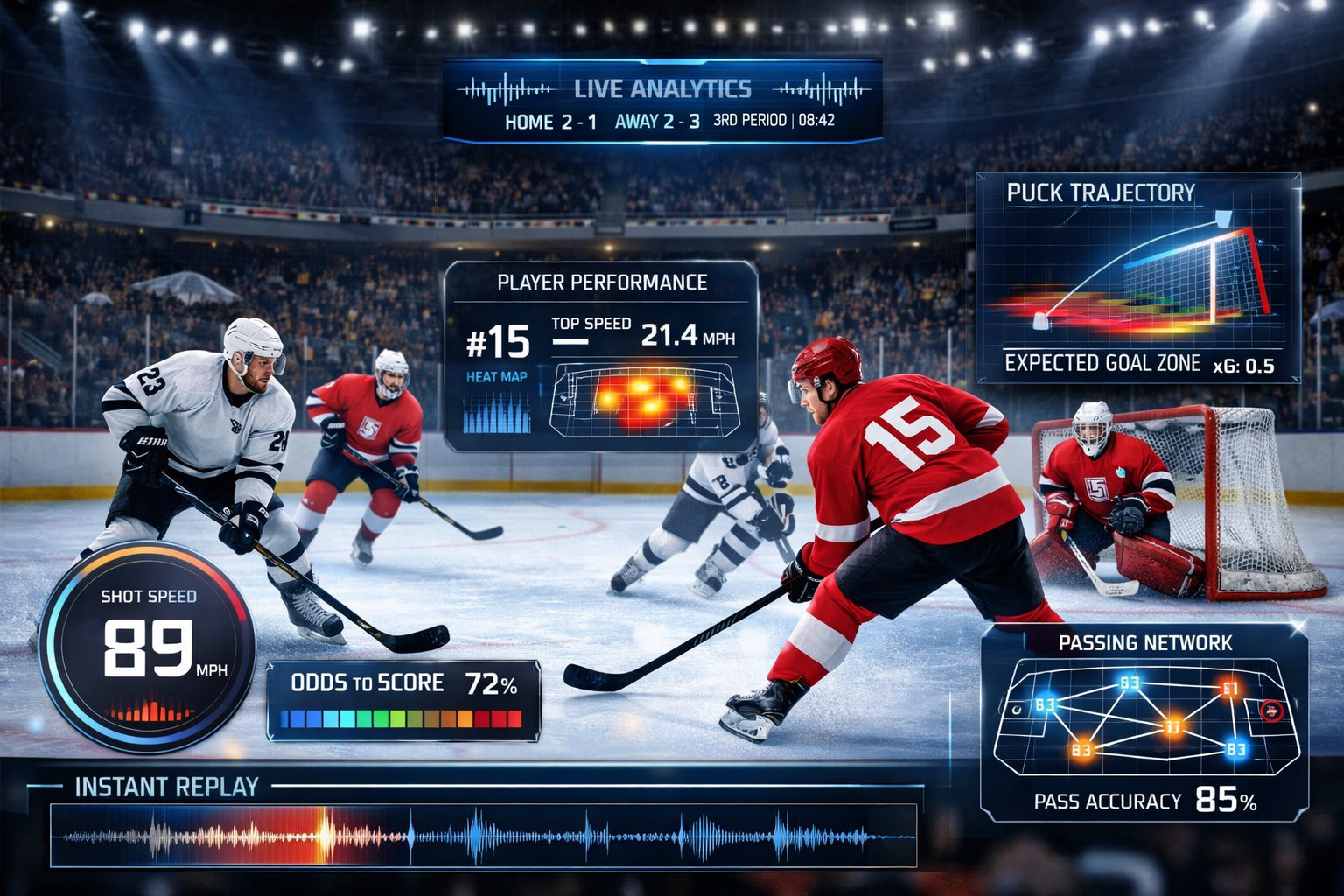
Predictive analytics, powered by artificial intelligence (AI), is rapidly transforming the way hockey is experienced by fans and broadcasters alike. By leveraging vast amounts of historical and real-time data, AI models can forecast game outcomes, player performances, and pivotal moments with increasing accuracy. This integration not only enriches the viewing experience but also fosters deeper engagement, offering fans fresh insights and interactive content that were once unimaginable. In this article, we explore how predictive analytics is reshaping hockey broadcasts and fan engagement, highlighting the practical benefits and technological innovations driving this change.
The Evolution of Predictive Analytics in Hockey
Historically, sports analysis relied heavily on expert commentary and manual interpretation of statistics. While these methods remain valuable, advances in AI and machine learning have introduced a new era of data-driven insights. Predictive analytics in hockey involves processing comprehensive datasets—from player stats and team dynamics to situational factors like ice time and penalty minutes—to build models that anticipate future events in the game.
Modern AI systems utilize techniques such as regression analysis, neural networks, and ensemble learning to identify patterns that human analysts might overlook. These models are continuously refined with fresh data, enabling predictions that adjust dynamically as the game unfolds. The result is a more nuanced understanding of the sport, offering fans and broadcasters unprecedented foresight.
How AI Models Forecast Game Outcomes
Data Inputs and Model Training
At the core of predictive analytics is data. AI models ingest a wide array of inputs, including:
- Player statistics: Goals, assists, plus-minus ratings, shooting percentages, faceoff wins, and more.
- Team performance metrics: Win-loss records, power play efficiency, penalty kill success, and home/away performance trends.
- Situational data: Time remaining, current score, player lineups on the ice, and fatigue levels.
- Historical matchups: Past outcomes between teams, venue-specific performance, and player head-to-head stats.
These inputs feed into machine learning algorithms trained on thousands of past games. The models learn which factors most strongly correlate with winning probabilities and scoring chances. With real-time data integration, the system updates predictions as line changes occur, penalties are called, or momentum shifts.
Types of Predictions
- Game outcome probabilities: Estimating the likelihood that one team will win, lose, or the game will go into overtime.
- Player performance forecasts: Predicting individual player contributions such as points, shots on goal, or time on ice.
- Moment-by-moment event prediction: Anticipating key plays like power-play opportunities, goals, or critical saves in near real-time.
Enhancing Fan Engagement Through Predictive Analytics
Interactive Broadcast Features
Broadcasters are increasingly incorporating AI-driven predictions into their live coverage, creating a more engaging and immersive experience. For example, on-screen graphics might display win probability charts that update with every shift or highlight players predicted to score next. These features keep viewers emotionally invested and informed, even if they are casual fans.
Moreover, AI-powered platforms enable personalized content delivery. Fans can receive alerts on their devices about predicted game outcomes or player milestones tailored to their favorite teams and players, deepening their connection to the sport.
Fantasy Hockey and Betting Insights
Predictive analytics also plays a vital role in fantasy sports and sports betting. AI models help fantasy hockey managers make data-backed lineup choices and trades by projecting player performances with higher precision. Similarly, bettors gain access to sophisticated odds and scenario analyses, improving the quality of their wagers.
Augmented Reality and Virtual Experiences
Emerging technologies like augmented reality (AR) are leveraging predictive data to create immersive fan experiences both in arenas and at home. Imagine an AR app that overlays predicted player movements or scoring chances onto a live game feed, turning passive watching into an interactive analytical experience. These innovations are expected to grow alongside predictive analytics capabilities, broadening the ways fans connect with hockey.
Challenges and Considerations
While predictive analytics offers exciting possibilities, there are inherent challenges to consider:
- Data quality and completeness: Models are only as good as the data they consume. Incomplete or inaccurate data can lead to misleading predictions.
- Unpredictability of sports: Hockey is influenced by many random factors such as injuries, referee decisions, and momentum swings that are difficult to quantify.
- Overreliance on AI: While AI provides valuable insights, it should complement, not replace, human expertise and intuition in broadcasts and fan interpretation.
Balancing these factors is crucial to maintaining credibility and maximizing the benefits of predictive analytics.
Key Takeaways
- AI-driven predictive analytics enhances hockey broadcasts by providing real-time insights into game outcomes and player performances.
- Fans benefit from interactive features, personalized content, and immersive experiences powered by accurate forecasting models.
- Fantasy sports and betting industries leverage predictive data to improve decision-making and engagement.
- Challenges such as data quality and the inherent unpredictability of the sport require careful management of AI-generated insights.
- Integrating AI with human expertise creates a balanced approach that enriches both fan enjoyment and broadcast quality.
Related Resources
- NHL Official Statistics – The National Hockey League’s official source for comprehensive player and team stats.
- MIT Sloan Sports Analytics Conference – A leading forum discussing the latest trends in sports analytics and AI applications.
- IBM Watson Sports Analytics – Insights into how AI and cognitive computing are enhancing sports predictions and fan engagement.
- Esports Insider: AI in Sports Broadcasting – An exploration of AI’s role in modern sports broadcasting technologies, including predictive analytics.