
The Hockey Puck: A Short History of the Small Disc That Changed Ice Hockey
A practical history of the hockey puck, from early wooden blocks and Canada's organized game to today's frozen rubber disc and sensor-tracked NHL pucks.
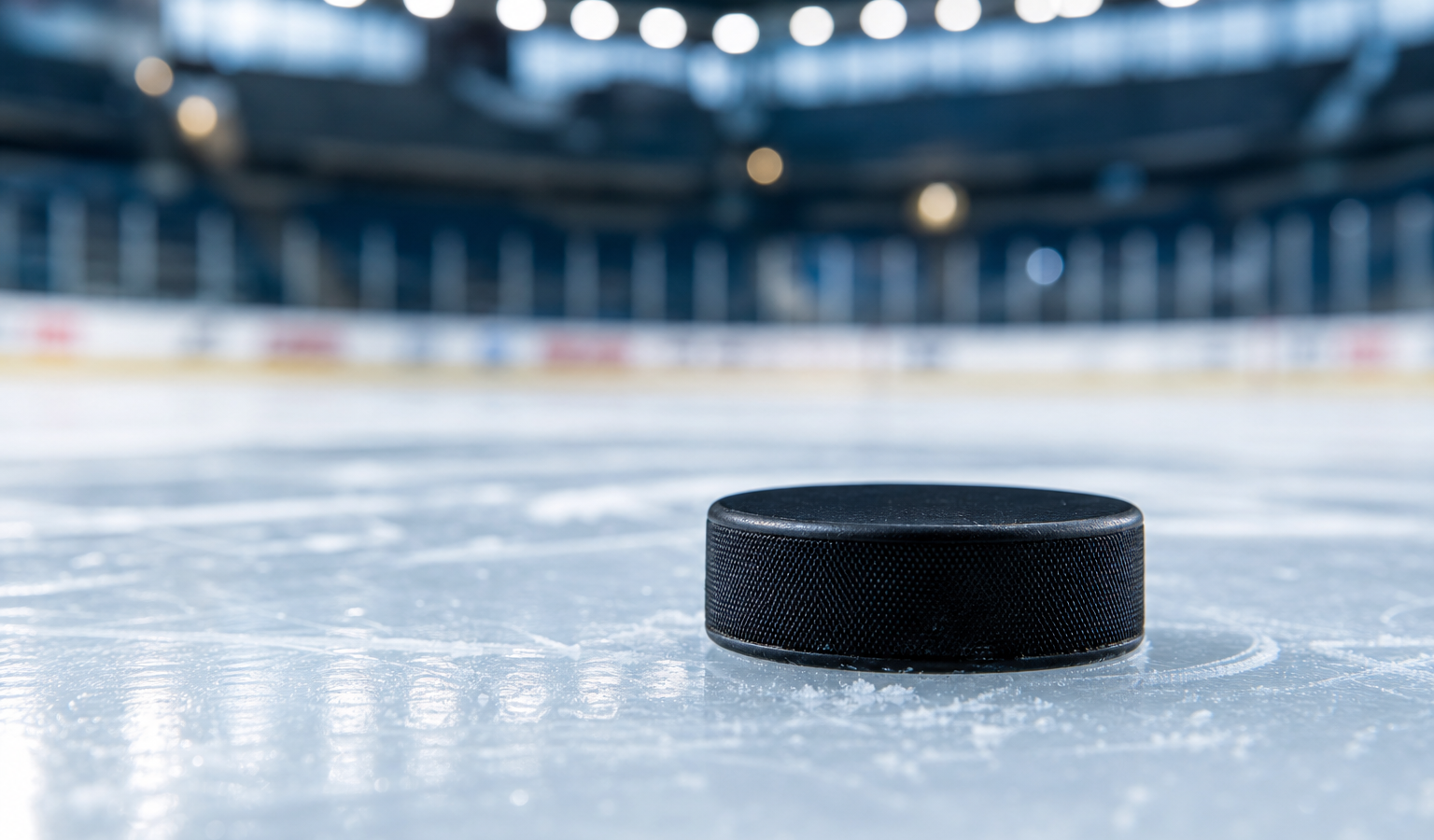
The hockey puck is simple in the way good tools are simple. It is a black rubber disc, small enough to disappear under a defender’s stick, hard enough to survive a slap shot, and important enough that the whole sport changes without it.
Ice hockey is fast because the puck is fast. It slides instead of rolls. It stays low. It can be passed through traffic, tipped in front of the net, banked off the boards, rimmed around the glass, or fired hard enough that a goalie has almost no time to think. The puck is not just equipment. It is the shape of the game.
Its history is also messier than a clean origin story. Modern organized ice hockey developed in Canada, but the sport grew out of older stick-and-ball games played on ice. Communities adapted field games, winter conditions, local materials, and informal rules until the game slowly became recognizable as hockey. The puck came from that same practical process: players needed something that worked on ice.
Before the Puck, There Were Balls and Blocks
Early ice games did not begin with the modern puck. According to Britannica’s history of ice hockey, research points to hockey-like games in early-1800s Nova Scotia with Mi’kmaq influence. Those games used a hurley, or stick, and a square wooden block rather than a ball. That detail matters because it shows the idea behind the puck before the puck had its final form: a low object that could slide across ice and stay closer to the surface.
A ball works well on grass or hard ground. On ice, it can bounce, pop up, or become dangerous to spectators and players. A flat block solved part of that problem. It stayed lower, moved more predictably, and made the game less like field hockey copied onto a frozen surface and more like its own winter sport.
Britannica records the first use of a puck instead of a ball at Kingston Harbour, Ontario, in 1860. That does not mean every game immediately used standardized rubber pucks. It means the game was already moving toward the object that would define it.
Montreal, 1875, and the Organized Game
The first recorded public indoor ice hockey game took place at Montreal’s Victoria Skating Rink in 1875. It was played by McGill University students, and the rules borrowed heavily from field hockey. That game is one of the cleanest landmarks in hockey history because it shows the sport moving from informal outdoor play into an organized, public, rule-driven version of itself.
Indoor hockey changed the demands on the puck. The playing surface was more controlled. Spectators were close. The game was quicker. A round ball that could rise into the crowd was a problem. A flat puck made the game safer, more controlled, and more distinct.
As hockey spread, the puck became part of the sport’s language. Players did not just chase an object. They managed angles, rebounds, friction, ice quality, boards, sticks, and traffic. The puck created a game of geometry at speed.
Why Rubber Won
Wood made sense early because it was available and easy to shape. Rubber eventually became the better answer because it could take impact, grip a stick blade enough for control, and slide cleanly over ice. Vulcanized rubber was especially useful because the process makes rubber tougher and more stable than raw natural rubber.
The modern hockey puck is still built around that same basic idea. It needs to be hard, dense, consistent, and predictable. If it bounces too much, the game gets sloppy. If it is too soft, shots and passes lose speed. If its weight or shape varies too much, skill becomes less portable from rink to rink.
The Modern NHL Puck
The current NHL rulebook keeps the puck tightly defined. For NHL competition, the puck must be made of vulcanized rubber or another approved material. It is one inch thick, three inches in diameter, and weighs between 5.5 and 6 ounces. It also has to be approved by the League.
The rulebook also says the home team is responsible for supplying official pucks and keeping them frozen. That last part is not trivia. A frozen puck is less bouncy and tends to slide more predictably. At NHL speed, small differences matter. A warmer puck can hop over a blade, jump off the boards, or produce a rebound that looks random instead of earned.
The black color is practical too. It contrasts against the white ice, which helps players, officials, fans, and cameras track it. The puck is small and fast enough already. Making it visually distinct is basic design doing useful work.
A Small Object That Changes How Hockey Works
The puck’s low profile is one reason hockey feels different from other invasion sports. A soccer ball, basketball, or lacrosse ball spends a lot of time above the playing surface. A hockey puck mostly lives on a plane. It can be lifted, chipped, saucered, or deflected, but most of the game is about controlling something that wants to slide.
That makes boards important. It makes rebounds important. It makes stick angle important. It also makes goalies different from goalkeepers in many other sports. A goalie is not only reading a shooter. They are reading screens, tips, deflections, ice texture, blade position, and whether the puck is rolling on edge.
The puck is also unforgiving. A slight rotation can change how it comes off the stick. A puck on edge can turn a clean shot into a wobble. A pass that is a few inches off can force a player to slow down, reach, or expose the puck to pressure. At high levels, puck control is really error control.
Interesting Puck Facts
- The puck is frozen before play. Cold rubber usually bounces less, which helps the puck slide and behave more consistently.
- It is heavier than it looks. A regulation NHL puck weighs 5.5 to 6 ounces. That weight gives it momentum, which is why blocked shots hurt and why goalies need serious protection.
- Its size shapes the sport. At three inches wide and one inch thick, the puck can hide in skates, disappear behind bodies, and slip through passing lanes that would not exist with a larger ball.
- The boards are part of puck movement. Hockey players use the rink itself as a passing surface. A rim around the wall, a bank pass, or a hard dump-in all depend on how the puck reacts to the boards and glass.
- Shots can reach extreme speeds. NHL tracking and equipment work has to account for pucks being struck at about 100 mph. That is one reason sensor-equipped pucks are harder to build than they might sound.
- The puck has been a broadcast problem. Hockey has always been difficult to follow on television because the puck is small, black, fast, and often hidden by skates and sticks. That challenge has pushed experiments in visibility and tracking.
- It is a collector’s object. Game-used pucks from first goals, playoff moments, outdoor games, and milestone nights can become meaningful pieces of hockey history.
From Rubber Disc to Tracked Data Point
The puck has stayed visually simple, but it has not stayed technologically untouched. The NHL has worked on puck and player tracking systems that use sensor-equipped pucks to measure location and movement in real time. According to NHL.com, one of the hard engineering problems was building a puck with electronics inside that could still meet NHL standards.
That is harder than it sounds. The puck has to be frozen. It has to survive hard shots. It has to rebound and slide like an approved game puck. It cannot feel wrong to players, and it cannot behave differently just because it contains a sensor. In other words, the technology has to disappear into the object.
That is the interesting thing about the hockey puck. Its best design is almost invisible. Nobody wants to notice the puck because it is manufactured poorly, bouncing strangely, or failing under pressure. The puck should vanish into the game until a player does something brilliant with it.
Why the Puck Still Matters
Hockey is a game of speed, contact, edges, and reaction time, but the puck is what turns all of that motion into a contest. It gives players something to fight for, protect, move, read, and finish. It creates the rhythm of possession and the chaos of rebounds. It rewards skill, but it also keeps enough unpredictability in the sport to make every shift feel alive.
The puck’s history follows a practical path: from blocks and improvised objects to rubber, standardization, freezing, and now tracking. It is a small piece of equipment, but it carries the history of the game inside its design. A flat disc made hockey faster, safer, more tactical, and more watchable. Not bad for three inches of rubber.