
The Future of Human-AI Collaboration in Aerospace
Explore how the synergy between human expertise and artificial intelligence is set to revolutionize aerospace technology, enhancing safety, efficiency, and innovation.
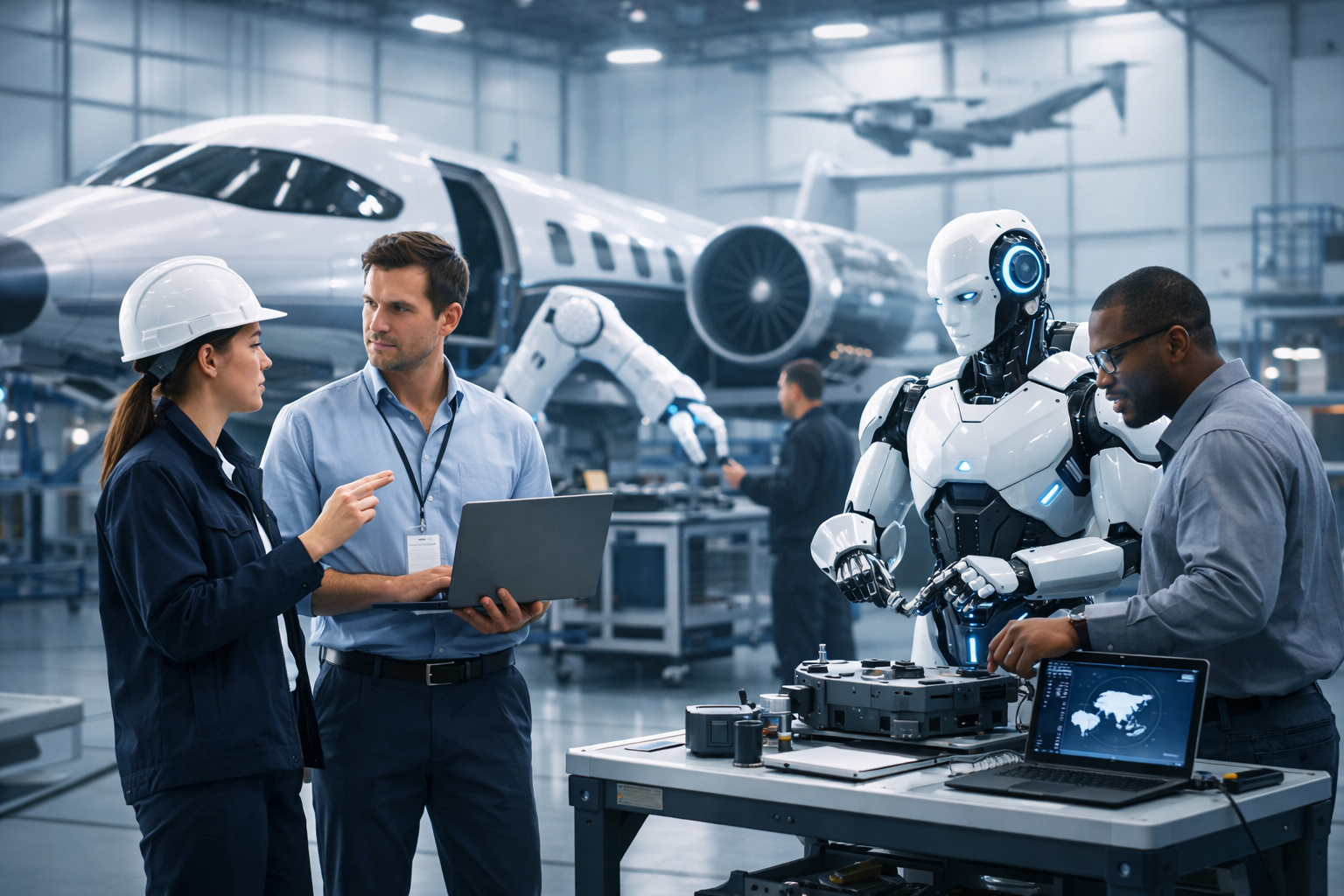
As aerospace technology continues to evolve at a rapid pace, the collaboration between human expertise and artificial intelligence (AI) is becoming increasingly critical. This partnership promises to redefine how we design, manufacture, operate, and maintain aircraft and spacecraft, pushing the boundaries of what is possible in aviation and space exploration. By combining the analytical power and efficiency of AI with the creativity, judgment, and ethical considerations of human professionals, the aerospace industry is poised for transformative advancements that will enhance safety, efficiency, and innovation.
The Current Landscape of AI in Aerospace
Artificial intelligence has already made significant inroads into aerospace. From predictive maintenance and autonomous flight systems to advanced simulations and mission planning, AI technologies are reshaping core aspects of aerospace operations. Machine learning algorithms analyze vast amounts of sensor data to predict component failures before they happen, reducing downtime and costs. Autonomous drones and pilot assistance systems leverage AI to enhance operational safety and performance.
Yet, despite these advances, AI alone cannot fully replace human decision-making. Aerospace environments are inherently complex and often unpredictable, requiring nuanced judgments that balance technical data with experience and intuition. This reality underscores the need for a symbiotic relationship between humans and AI, where each complements the strengths of the other.
How Human and AI Collaboration Drives Aerospace Innovation
Enhanced Decision-Making and Risk Management
AI systems excel at processing large datasets and identifying patterns that might elude human operators. However, human experts bring contextual understanding and ethical considerations that are essential when making critical decisions in aerospace. For example, AI can recommend optimal flight paths based on weather data, but human pilots and air traffic controllers interpret those recommendations within the broader context of safety, regulatory compliance, and passenger comfort.
This collaboration improves risk management by combining predictive analytics with human oversight, ensuring that automated systems are not only efficient but also aligned with operational realities and safety protocols.
Streamlined Design and Manufacturing Processes
The design phase of aerospace vehicles benefits immensely from AI-powered simulations and generative design techniques. AI algorithms can rapidly explore thousands of design permutations to optimize for factors such as weight, aerodynamics, and fuel efficiency. Human engineers then evaluate these AI-generated options, applying practical knowledge and innovation to select and refine the best solutions.
In manufacturing, AI-driven robotics and quality control systems enhance precision and reduce errors, but human workers remain essential for complex assembly tasks, troubleshooting, and continuous process improvement. This blend of automation and human craftsmanship leads to higher-quality aerospace products at reduced costs.
Improved Training and Human Performance
AI-powered simulators and virtual reality environments provide pilots and astronauts with immersive training experiences that adapt to individual learning styles and skill levels. These systems can simulate rare and hazardous scenarios that are difficult or impossible to replicate safely in real life.
Meanwhile, human instructors oversee training programs, ensuring that trainees develop the judgment and decision-making skills that AI cannot teach. This collaborative approach produces highly skilled professionals who are better prepared to work alongside AI technologies in operational settings.
Challenges and Ethical Considerations
While the potential benefits of human-AI collaboration in aerospace are vast, several challenges must be addressed to realize this future fully.
- Trust and Transparency: Operators need to understand how AI systems arrive at their recommendations to trust and effectively use them. Developing explainable AI that provides clear reasoning is crucial.
- Data Security and Privacy: Aerospace systems generate sensitive data that must be protected against cyber threats, requiring robust security protocols and human vigilance.
- Ethical Decision-Making: In scenarios involving life-critical decisions, defining the ethical frameworks guiding AI behavior and human oversight is essential to ensure accountability and public confidence.
- Skill Evolution: As AI takes on more routine tasks, human roles will evolve towards oversight, strategic planning, and innovation, necessitating continuous skill development and education.
The Road Ahead: Emerging Trends in Human-AI Aerospace Collaboration
Looking forward, several trends indicate how this collaboration will deepen and expand:
- Hybrid Autonomy: Future aerospace vehicles will integrate AI-driven autonomous capabilities with human pilots able to intervene or take control when needed, balancing efficiency and safety.
- AI-Augmented Analytics: Advanced AI tools will support engineers and operators by providing real-time insights, anomaly detection, and maintenance recommendations based on continuous data streams.
- Collaborative Robotics: Intelligent robots will work alongside human technicians in manufacturing and maintenance, enhancing productivity while preserving human oversight.
- Personalized Training Systems: AI will enable highly customized training programs that adapt dynamically to learner progress, maximizing skill acquisition and retention.
- Ethical AI Frameworks: Industry-wide standards and regulations will evolve to govern AI use in aerospace, ensuring that human values and safety remain paramount.
Key Takeaways
- Human expertise and AI complement each other, combining analytical power with contextual judgment to advance aerospace technology.
- Collaborative AI applications enhance safety, efficiency, design, manufacturing, and training in aerospace.
- Challenges such as trust, security, ethics, and skill evolution require ongoing attention and balanced solutions.
- Emerging trends point to hybrid autonomy, AI-augmented analytics, collaborative robotics, personalized training, and ethical frameworks as key future developments.
- Successful human-AI collaboration in aerospace depends on clear communication, transparency, and continuous learning.
Related Resources
- NASA Artificial Intelligence – Explore NASA’s initiatives and research projects involving AI applications in aerospace and space exploration.
- FAA AI Programs – The Federal Aviation Administration’s approach to integrating AI in unmanned aircraft systems and aviation safety.
- International Civil Aviation Organization (ICAO) on AI – Guidelines and policies for safe AI deployment in global aviation.
- Aviation Today: How AI Is Transforming Aerospace – Industry insights and case studies on AI’s impact in aerospace operations and development.