

In recent years, the aviation industry has witnessed a significant transformation in how pilots are trained and prepared for the complexities of modern flight. At the forefront of this evolution is artificial intelligence (AI), which is enhancing pilot training and simulation through advanced technologies that offer more realistic, adaptive, and efficient learning experiences. AI-powered simulators and training programs are not only improving skill acquisition but also enhancing safety, reducing costs, and enabling personalized training pathways for pilots at all levels.
The Rise of AI in Pilot Training
Traditional pilot training has long relied on flight simulators, classroom instruction, and in-flight experience. While effective, these methods can be costly, time-consuming, and limited in adaptability. AI introduces a new paradigm by leveraging machine learning, data analytics, and real-time feedback to create dynamic training environments that closely mimic real-world flight challenges.
AI technologies analyze vast amounts of flight data, weather patterns, and human performance metrics to tailor scenarios that address individual pilot strengths and weaknesses. This approach fosters faster learning curves, improved decision-making skills, and greater preparedness for unexpected situations.
Adaptive Training Simulators
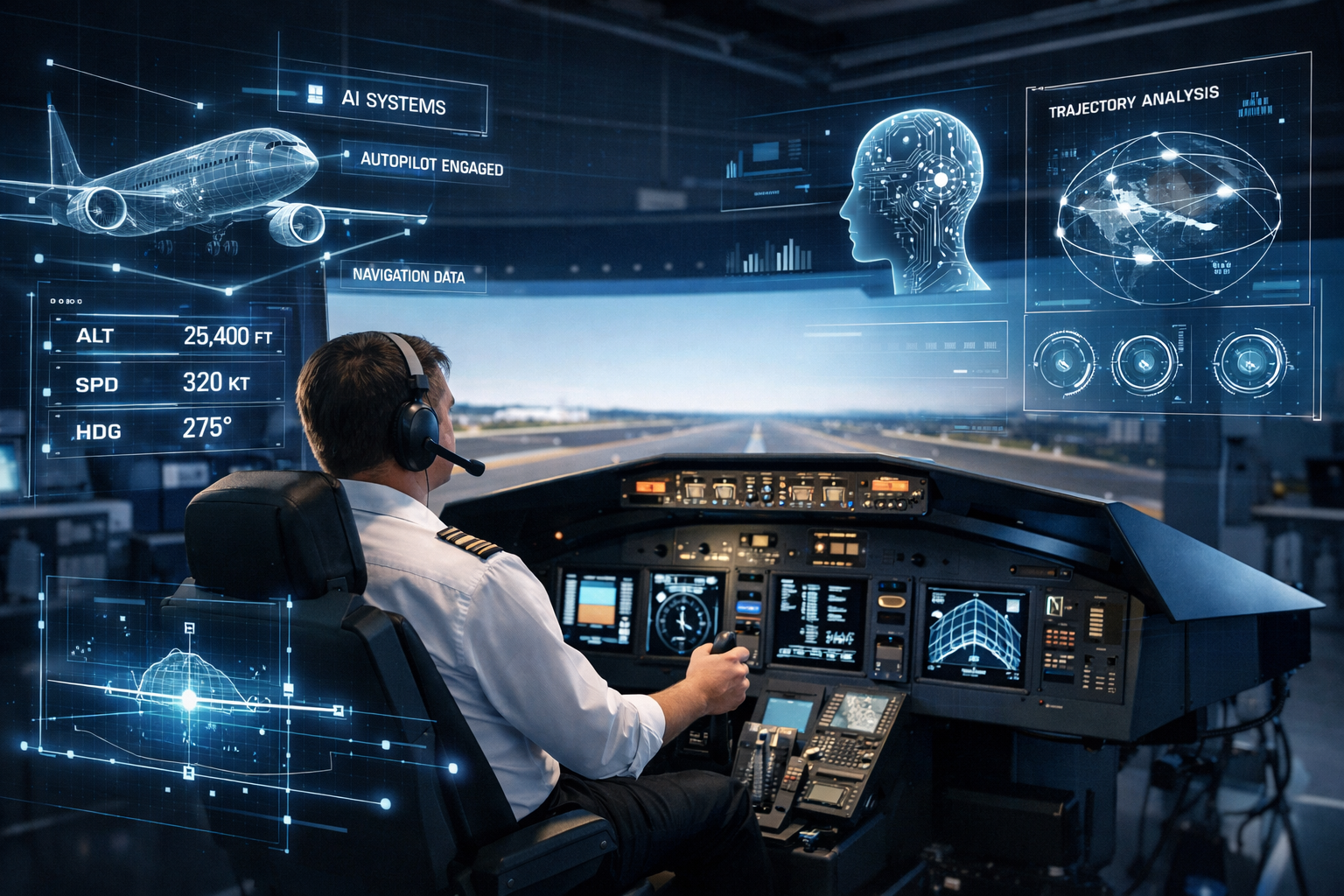
One of the most impactful applications of AI in aviation training is the development of adaptive simulators. Unlike traditional fixed-scenario simulators, AI-powered systems can modify training exercises on the fly, responding to a pilot’s actions and performance in real time.
- Personalized Difficulty Adjustment: AI algorithms assess the trainee’s competencies and dynamically adjust the complexity of flight scenarios, ensuring continuous challenge without overwhelming or under-challenging the pilot.
- Realistic Scenario Generation: AI can generate diverse and unpredictable weather conditions, mechanical failures, or air traffic scenarios, providing pilots with extensive exposure to potential in-flight emergencies.
- Immediate Feedback and Coaching: The system can provide instant analysis and suggestions, highlighting areas that require improvement and reinforcing correct responses.
Enhanced Decision-Making Through AI Analytics
Beyond skill development, AI enhances cognitive training by simulating real-time decision-making pressures that pilots face. Through advanced analytics, AI systems track pilot responses, reaction times, and stress indicators, offering insights into their situational awareness and judgment under pressure.
This data-driven approach allows training programs to focus on critical soft skills such as risk assessment, prioritization, and crisis management, which are essential for safe flying but difficult to teach through conventional methods.
Benefits of AI-Enhanced Pilot Training
The integration of AI into pilot training brings a host of practical benefits for aviation professionals, training institutions, and the industry as a whole.
1. Improved Safety and Risk Reduction
AI-driven simulators allow pilots to experience rare but dangerous scenarios in a controlled environment, preparing them for real emergencies without any actual risk. This comprehensive exposure significantly contributes to reducing in-flight errors and accidents.
2. Cost Efficiency and Resource Optimization
Flight hours on actual aircraft are expensive and limited. AI-powered simulations reduce the need for costly real-world practice flights by providing high-fidelity virtual experiences that meet or exceed regulatory training standards.
3. Personalized Learning and Skill Retention
AI’s ability to track individual progress and adapt training content means pilots receive focused instruction where they need it most. This personalized approach improves knowledge retention and ensures that pilots maintain proficiency over time.
4. Scalability for Diverse Training Needs
Whether training new recruits or offering refresher courses for seasoned pilots, AI simulators can scale to accommodate different experience levels and aircraft types, supporting a wide range of aviation training requirements.
Challenges and Considerations
While AI-enhanced pilot training offers promising advantages, it also presents challenges that must be addressed for widespread adoption.
- Data Privacy and Security: The collection and analysis of pilot performance data necessitate stringent protections to safeguard sensitive information.
- Integration with Existing Systems: Training organizations must ensure AI tools are compatible with current simulators and regulatory frameworks.
- Human Oversight and Trust: Despite automation, human instructors remain vital for interpreting AI feedback and mentoring trainees to build confidence and judgment.
- Cost of Implementation: Developing and deploying advanced AI simulators requires significant investment, which may be a barrier for smaller training centers.
Future Outlook: AI and the Evolution of Pilot Training
The trajectory of AI in aviation training points toward even greater immersion and interactivity. Emerging technologies such as augmented reality (AR) and virtual reality (VR) combined with AI will offer multi-sensory training environments that replicate cockpit conditions with unprecedented realism.
Additionally, AI’s predictive capabilities may soon allow for proactive maintenance training, where pilots learn to identify and respond to subtle indicators of potential system failures before they occur. This proactive approach could further enhance safety and operational efficiency.
As AI continues to mature, the synergy between human expertise and intelligent systems will redefine pilot education, making it more effective, accessible, and aligned with the demands of modern aviation.
Key Takeaways
- AI enhances pilot training by creating adaptive, personalized simulation experiences that improve skill acquisition and decision-making.
- AI-powered simulators enable exposure to a wide range of realistic flight scenarios, including emergencies, without actual risk.
- The technology improves safety, reduces training costs, and supports scalable learning for pilots at all experience levels.
- Challenges such as data security, system integration, and the need for human oversight remain important considerations.
- Future developments in AI, AR, and VR promise even more immersive and predictive pilot training solutions.
Related Resources
- Federal Aviation Administration (FAA) Pilot Training Resources – Official guidelines and materials supporting pilot education and certification.
- NASA Aeronautics Research: AI in Aviation – Insights into NASA’s research on AI applications in aviation safety and training.
- FlightGlobal: How AI and Simulation Are Transforming Pilot Training – Industry analysis on AI’s impact on aviation training and simulation.
- European Union Aviation Safety Agency (EASA) Pilot Training – Regulatory standards and updates on pilot training within Europe.
- SESAR Joint Undertaking: AI and Digital Transformation in Aviation – Research on digital innovations shaping the future of aviation training and operations.