

The future of aerospace is rapidly evolving with the integration of artificial intelligence (AI) into autonomous flight systems. From drones conducting intricate deliveries to fully autonomous aircraft navigating complex airspaces, AI is revolutionizing how machines perceive, decide, and operate in flight. This transformation not only enhances safety and efficiency but also opens new frontiers in aviation, logistics, and defense.
The Role of AI in Autonomous Flight
AI serves as the brain behind autonomous flight, enabling aircraft and drones to interpret environmental data, make real-time decisions, and adapt to dynamic conditions without human intervention. Unlike traditional autopilot systems that follow predefined instructions, AI-powered systems use machine learning, computer vision, and sensor fusion to understand their surroundings, predict potential issues, and optimize flight paths.
Key AI capabilities in autonomous flight include:
- Perception: Using cameras, lidar, radar, and other sensors, AI systems create a detailed 3D map of the environment, detecting obstacles, weather changes, and other aircraft.
- Decision-making: Leveraging algorithms trained on vast datasets, AI evaluates risks, chooses optimal routes, and manages emergency responses.
- Control: AI directly influences flight controls to maintain stability, maneuver around hazards, and adjust speed and altitude for efficiency.
Enabling Safe Navigation in Complex Environments
One of the biggest challenges in autonomous flight is navigating environments that are unpredictable and congested. Urban airspaces, mountainous regions, and areas with rapidly changing weather pose significant risks. AI systems overcome these challenges through:
Real-Time Obstacle Detection and Avoidance
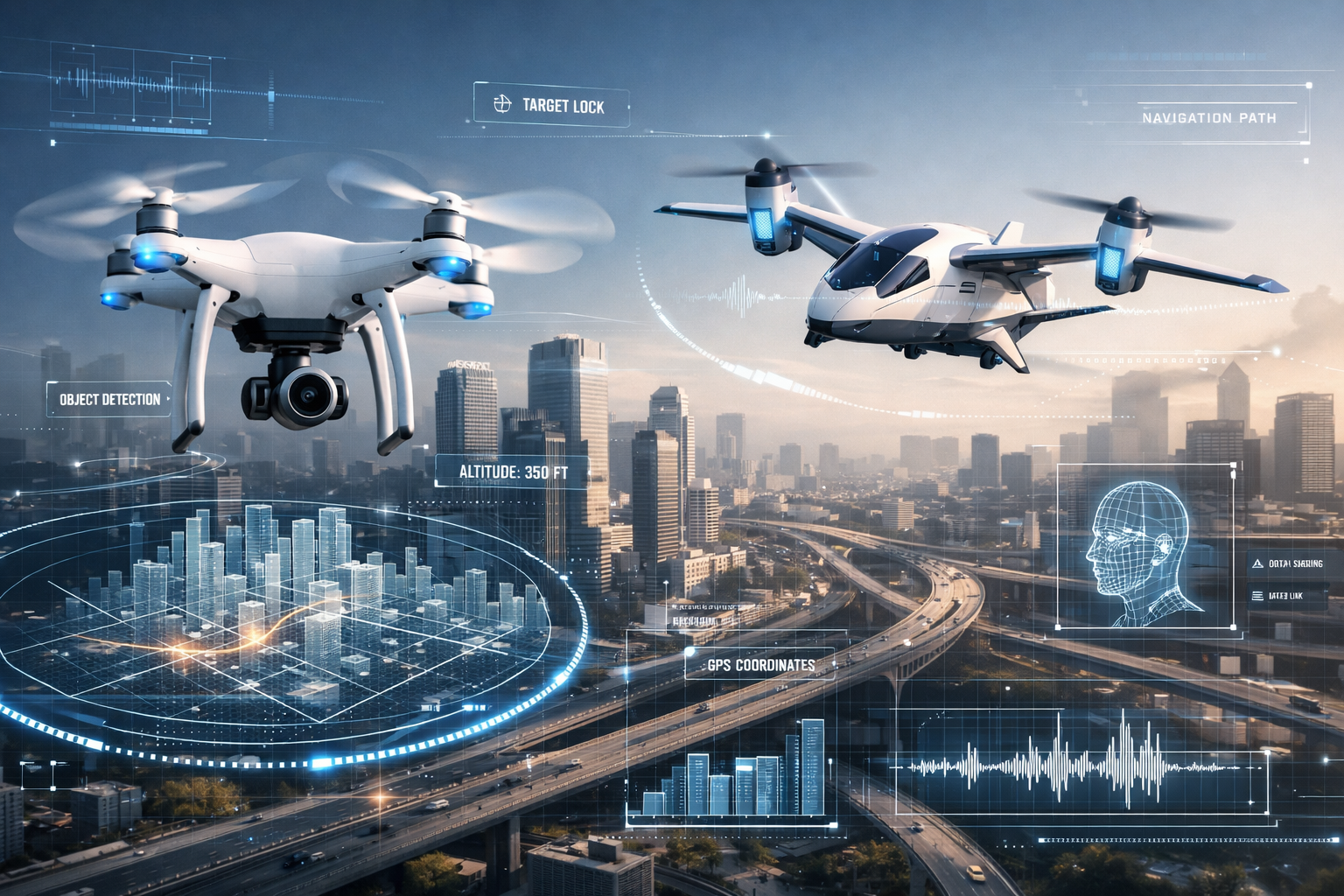
AI-powered drones and aircraft continuously scan their surroundings, identifying obstacles such as buildings, trees, birds, and other aircraft. Advanced object recognition and tracking allow them to predict the movement of these obstacles and execute collision avoidance maneuvers autonomously. This capability is critical for urban drone deliveries and air taxis operating in densely populated areas.
Adaptive Route Planning
Unlike fixed flight plans, AI enables dynamic route adjustments based on real-time data. For example, if sudden weather changes occur or air traffic congestion arises, the AI system recalculates the best path to maximize safety and efficiency. This flexibility reduces delays and enhances fuel economy by optimizing flight altitude and speed.
Robust Emergency Response
In emergencies, such as system failures or unexpected hazards, AI can swiftly assess the situation and execute contingency plans. This may involve diverting to alternate landing sites, deploying safety protocols, or communicating with ground control autonomously. Such responsiveness is vital for minimizing risk to passengers, cargo, and people on the ground.
Applications Driving the Future of Aerospace
AI-enabled autonomous flight is transforming multiple sectors within aerospace and beyond. Here are some key applications:
Commercial Drone Delivery
Companies are leveraging AI to manage fleets of autonomous drones for last-mile delivery of packages, medical supplies, and food. AI helps drones navigate urban landscapes, avoid obstacles, and optimize delivery routes to ensure timely and safe arrivals.
Urban Air Mobility (UAM)
Electric vertical takeoff and landing (eVTOL) aircraft, designed for short-distance urban travel, rely on AI for autonomous flight control and traffic management. AI facilitates safe integration of UAM vehicles into crowded city airspaces, promising a new era of personal and public transportation.
Military and Defense Applications
AI enhances unmanned aerial vehicles (UAVs) with autonomous mission planning, target recognition, and adaptive flight capabilities. These systems reduce pilot risk and expand operational capabilities in complex and contested environments.
Environmental Monitoring and Disaster Response
Autonomous drones equipped with AI collect data for environmental studies, monitor wildlife, and assist in disaster relief by surveying hazardous areas or delivering emergency supplies where human access is limited or unsafe.
Challenges and Considerations
Despite its potential, AI in autonomous flight faces several technical and regulatory challenges that must be addressed for widespread adoption:
- Reliability and Safety: AI systems must meet rigorous standards to ensure fail-safe operation, especially in passenger-carrying aircraft.
- Cybersecurity: Autonomous systems are vulnerable to hacking and data breaches, requiring robust security protocols.
- Regulatory Frameworks: Governments and aviation authorities need to develop clear regulations governing autonomous flight operations and air traffic integration.
- Ethical and Legal Issues: Accountability in case of accidents and decision-making transparency are ongoing concerns.
Ongoing research and collaboration among industry leaders, regulators, and academia are crucial to overcoming these hurdles and ensuring that AI-driven autonomous flight becomes a safe and trusted reality.
Key Takeaways
- AI enables autonomous drones and aircraft to perceive, decide, and navigate complex environments with enhanced safety and efficiency.
- Real-time obstacle detection, adaptive route planning, and emergency response are critical AI functions for autonomous flight.
- Applications range from commercial drone deliveries and urban air mobility to military operations and environmental monitoring.
- Challenges include ensuring reliability, cybersecurity, regulatory compliance, and addressing ethical concerns.
- Collaboration across sectors is essential to unlock the full potential of AI in aerospace.
Related Resources
- FAA UAS Integration – Official updates and regulations from the Federal Aviation Administration on integrating unmanned aircraft systems into the national airspace.
- MITRE Aerospace AI and Autonomy Research – Research insights on AI applications in aerospace from a leading non-profit research organization.
- NASA Advanced Air Mobility Project – NASA’s initiative exploring autonomous air vehicles and urban air mobility technologies.
- DARPA Gremlins Program – Information on DARPA’s efforts in autonomous drone swarms and mid-air recovery systems.
- ICAO Autonomous Systems – International Civil Aviation Organization’s guidance on the safe integration of autonomous systems in aviation.