


In what feels like a lifetime ago, I had the privilege of working with someone who viewed the world through a very different lens than my own. They were highly educated, thoughtful, and often frustrating in ways I did not yet have the context to appreciate. Over years of working together, I learned more from them than I realized at the time.
They had a saying they used constantly to keep the machine moving forward.
“Schedule is King.”
At the time, I hated it.
Why “Schedule is King” Used to Make Me Angry
As a grunt level maintainer in a fast paced, high stress environment, that phrase felt like fuel thrown on an already burning fire. It sounded disconnected from the reality of the work. From my perspective, it came from someone whose hands were not calloused, someone insulated from the physical and mental grind that defined my days.
In some situations, that frustration was probably justified. Still, the phrase stuck with me long after I left that environment behind.
Back then, I worked in scenarios where stopping was often more stressful than continuing. Breaks felt like a liability. Schedules felt like constraints imposed by people far removed from the consequences of delay. Anything involving time as a measurable coefficient felt unfair. Timed tests, deadlines, countdowns. Time always made things harder and often degraded the quality of the work itself, IMO.
I saw time as pressure, not structure.
As I have grown older, the fog that shaped those early opinions has slowly cleared. Experience has a way of sanding down sharp edges, especially the ones formed by certainty without perspective.
The Moment the Lesson Finally Clicked
Time is not optional. It inserts itself into every system, every process, every decision, whether we acknowledge it or not. Nothing exists outside of it. Nothing escapes it. Time shapes outcomes just as much as effort or skill, and often more than either.
That is when I finally understood the lesson behind the phrase, even if I no longer fully agree with its framing.
A schedule matters. It creates alignment. It exposes bottlenecks. It forces decisions. It reveals tradeoffs that otherwise stay hidden. But a schedule alone does not move an idea forward.
People do.
Over time, I adapted the idea into something that fit my own mindset and the way I operate in the world.
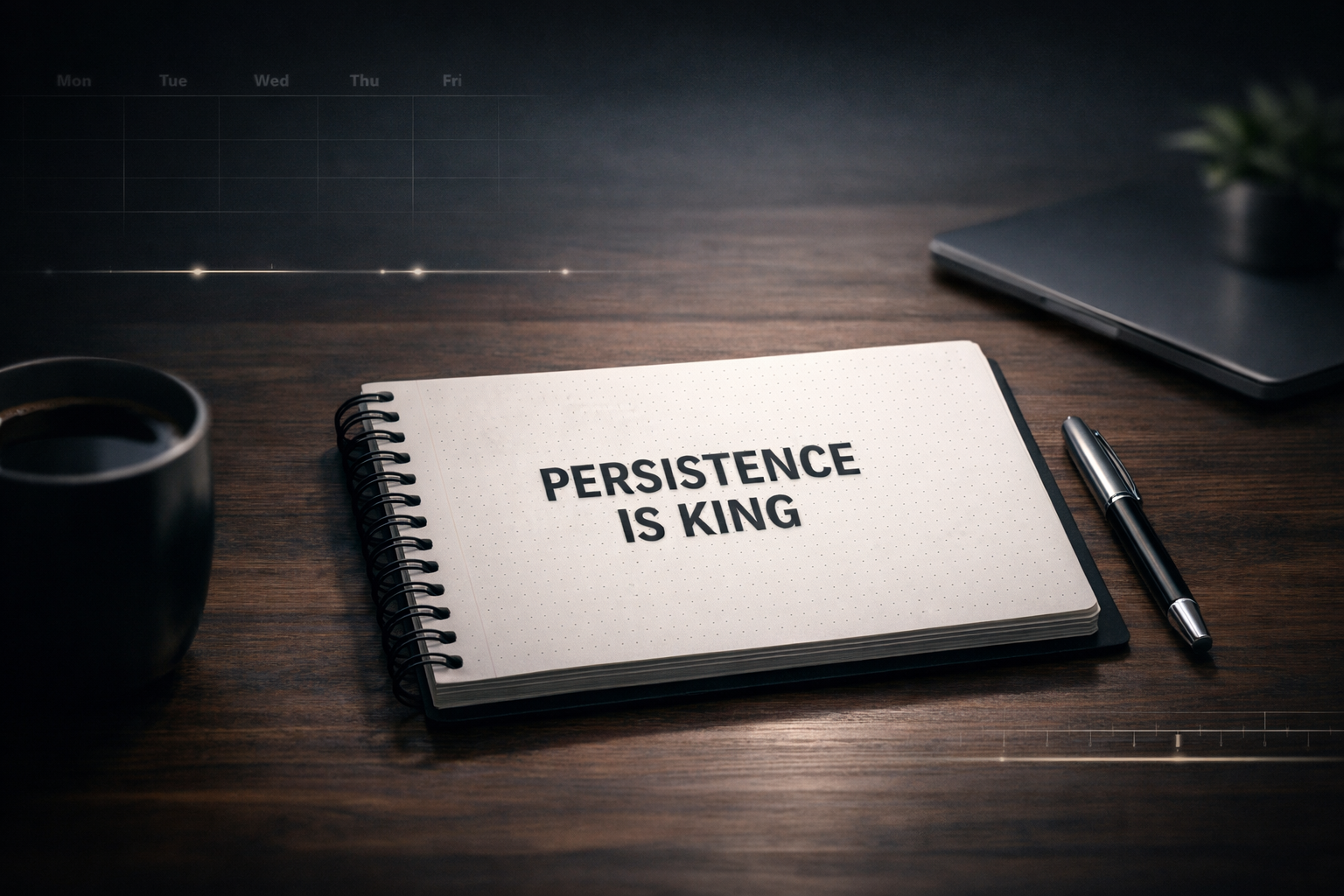
Persistence is King.
For me, persistence puts ownership back where it belongs. On the individual. A schedule can exist on paper and still fail. Persistence shows up when motivation fades, when conditions are imperfect, and when progress feels invisible. Persistence is what carries work forward when plans break down and timelines slip.
Why I Changed It to “Persistence Is King”
A schedule tells you when something should happen. Persistence determines whether it happens or not.
This shift was not a rejection of the original idea. It was an evolution of it. Time still matters. Structure still matters. But persistence is what sustains effort across time. It is what turns intention into momentum and momentum into results.
Time Passes Either Way, What Do You Persist In
Looking back, I am grateful that phrase annoyed me enough to stay with me. Some lessons only take root after years of resistance.
So now I ask myself a different question than I used to.
Am I honoring the schedule, or am I honoring the work through persistence and ensuring the strength to persevere through the unaccounted for?
In the end, time will pass either way. What we choose to persist in is what gives that time meaning and keeps us in the moment. 🤙🏼🏒